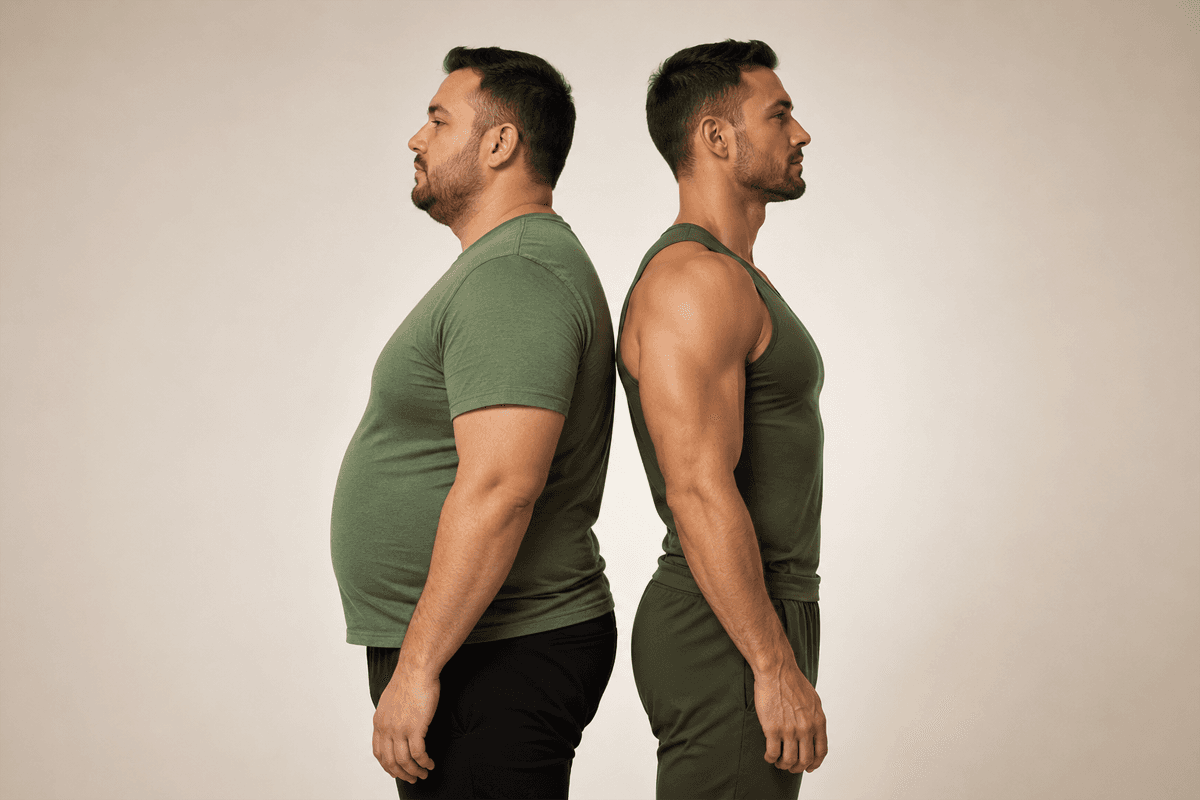

Yes Testosterone replacement therapy TRT supports fat loss in men according to recent studies. Contemporary research of NIH indicates TRT may improve muscle fibers, energy levels and metabolism in men with declining testosterone levels. The process may be effective under medical supervision, but long term benefits and risks are still being studied.
Obesity or weight gain is the reason for shortened life expectancy. It's a chronic condition that cannot counter lifestyle changing alone. Bypassing the current market fake products, research based Testosterone replacement therapy can be the solution for men above the age of 30 based on different factors.
Obese men are searching for solutions like TRT. Nowadays, there are multiple counter products available of different brands with slogans to prevent increasing weight gain. What men really need is the research insights before choosing.
Research indicates that long term TRT when combined with a healthy lifestyle may contribute to significant reduction in fat mass and waist inches. The results like maintaining a healthy body mass index (BMI) may be more effective in men clinically declared with low T-level.
In addition, there is ongoing research to identify whether TRT is just a hormonal correction or fat mass reduction. A study published in the National Library of medicine reported TRT works in both testosterone production and to maintain muscle mass by improving physical activity. However, to what extent the procedure prevents muscle wasting and helps to build muscle is still understudied.
Disclaimer: Trt is not a casual procedure of losing weight but prescription based. Testosterone related products and therapies are only approved by the US Food and Drug Administration (FDA) in specific medical conditions. trt is not a weight loss drug and uses are not universally approved. So, remains an area of ongoing medical research.
What Is TRT and How Does It Affect the Body?
Let's understand what T-therapy is. Usually, people understand this as a dark marketing tactic of selling new labelled products. But in reality, the low testosterone disease is getting more common among men.
According to a survey of the Center of Disease Control and Prevention 41.9% of the population is dealing with obesity. National data says 2 from every 5 adults are obese and 35% of adults are above the average BMI in the USA alone.
For this big ratio, researchers are interested in finding the treatment from therapies as they are safer. So, they look for what hormones cause adults to reach obesity. On other hand studies are being done to observe safe products to help losing weight and gain a healthy BMI.
Understanding Testosterone Replacement Therapy
Testosterone Replacement Therapy trt is a medical treatment that adds synthetic testosterone to the body. Doctors prescribe it for men with a condition called hypogonadism (reduced testosterone levels). This condition means the body cannot produce enough testosterone on its own. The goal of TRT is to bring testosterone levels back to a normal range. TRT comes with clinically prescribed different options packed with certain benefits and risks. Options are:
- Injections
- Gels
- Paches
- Oral capsules
Note: The trt is not a weight loss drug and the suitable option is fully decided by a professional healthcare provider according to the medical condition of an individual. No individual should opt any product or consumption option on their own to prevent associated risks.
How Testosterone Influences Fat and Muscle?
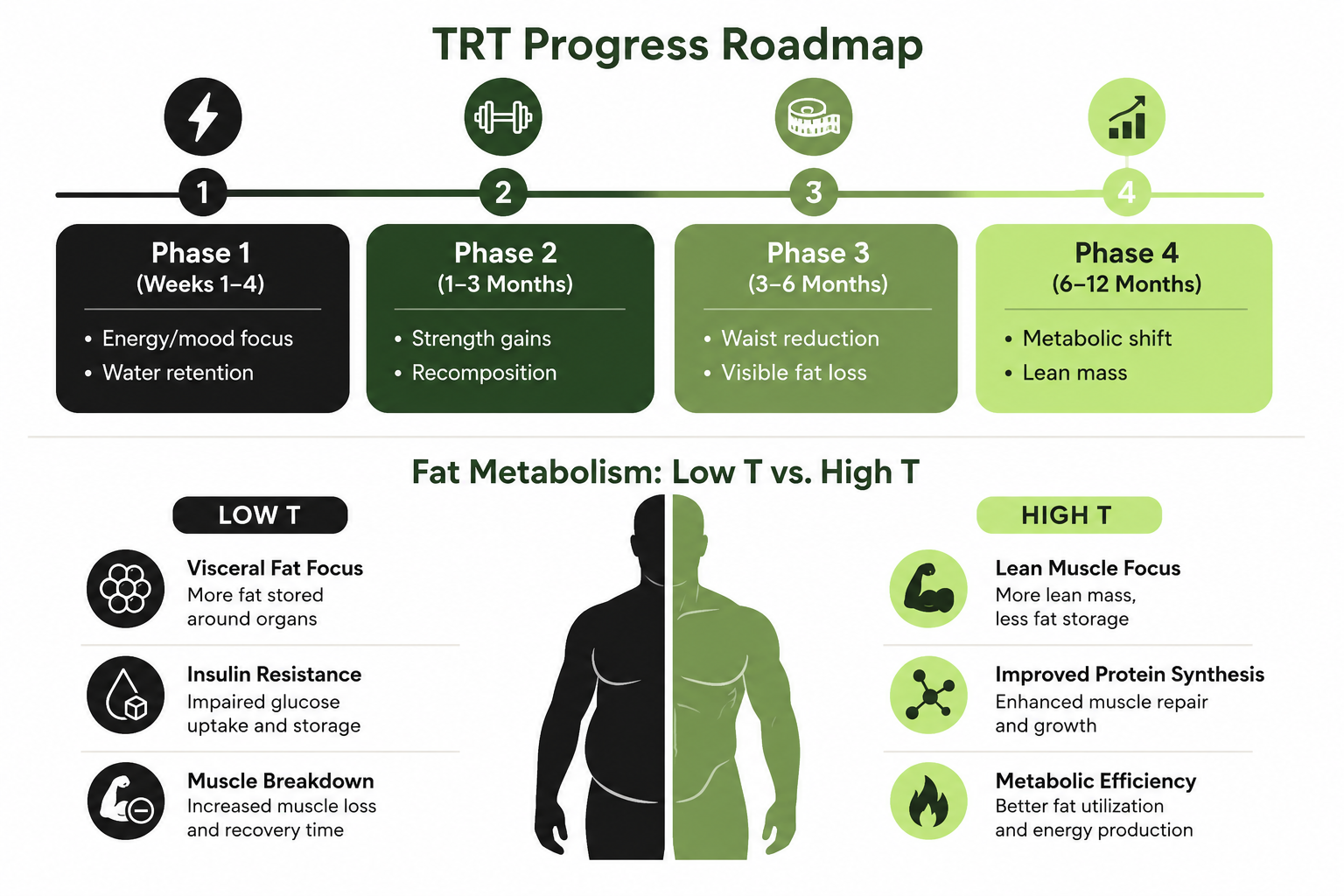
Testosterone may promote protein synthesis, basal metabolic rate and inhabited fat storage. In this way T-level may act as a master regulator for improved body composition. Analytical studies are in view that higher T-levels promote lean body mass and insulin resistance.
Testosterone naturally helps in (anabolism) muscle growth and reducing belly fat. Lets see how male sex hormone can impact on fat division and muscle growth:
Fat distribution (visceral fat vs subcutaneous):
Higher T levels may reduce belly fat while reduced testosterone levels accumulate body fat. Enough T-levels inhibit uptake of triglyceride and prevent Visceral fat accumulation. On the other hand, studies indicate increased body mass as one of the symptoms of low testosterone.
- Visceral fat (store around organs)
- Subcutaneous fat ( Accumulate under skin)
| Feature | Visceral Fat | Subcutaneous Fat |
| Location | Around internal organs (abdomen) | Under the skin |
| Appearance | Hard, protruding belly | Soft, pinchable fat |
| Health Risk | High (linked to diabetes, heart disease) | Lower (unless excessive) |
| Hormonal Impact | Disrupts metabolism & testosterone | Minimal hormonal effect |
| Fat Loss | Reduces with overall fat loss | Easier to lose with strength training |
Muscle growth and metabolism link:
T is an anabolic hormone that may promote protein synthesis and muscle fibers in order to increase lean muscle mass. Consequently, higher muscle mass is associated with etiquette metabolism rate that helps in burning more calories at rest.
Hormonal balance impact (insulin, cortisol):
Low T-level is associated with insulin resistance (syndrome) and visceral fat storage. while high T may help in regulating blood sugar levels. On the other hand, cortisol is known to break down tissues during stress periods. In this case moderate t-level help in managing cortisol by preventing muscle breakdown.
Can TRT Help With Weight Loss?
TRT is not a miracle drug but yes it may help with weight journey in certain medical conditions. As per National Library of Medicine studies, long term T-therapy may be effective for improved body composition and overall quality of life. Studies suggest T-therapy to prevent overall metabolism related syndromes to avoid weight gain. Lets see potentials of the therapy:
Direct Effects on Fat Burning
The therapy may have some direct effects on metabolism and stored fat in following ways:
Lipolysis and fat metabolism:
Lipolysis is the process to utilize stored fat for daily tasks requirements of the body. TRT by increasing T levels boosted fat metabolism and helps in utilizing fat as a fuel source. This may help in reducing body mass and increase energy levels.
Impact on abdominal fat:
TRP by improving androgen may play a role in regulating fat stored around organs. As per some studies long term therapy may add to reduction of waist circumference.
Indirect Effects That Support Sustained Weight Loss
| Factor | How It Works | Potential Impact on Weight Loss |
| Increased Muscle Mass | Testosterone helps build muscle mass and maintenance | Muscle fiber may increase resting calorie burn |
| Improved Energy Levels | May reduce fatigue and improve stamina | More physical activity and resistance training energy |
| Better Mood | May influence mood stability and motivation | Improved adherence to diet and lifestyle habits |
What Research says: Limitations
A research article suggests that TRT does not have a permanent clinic significant to weight loss. Most studies are based on very short duration to measure long term effects. It is also suggested that the therapy may be more effective when combined with men's health routine, dietary habits and strength training.
Remember the results are not the same for all populations and are still being observed.
Who Benefits Most From TRT for Weight Loss?
As discussed, TRT for weight loss is not a universal phenomenon. Rather it's more particular to age, metabolism and clinical conditions of t-level present. Not everyone can experience the same outcomes. On average bases individuals with below conditions can benefit from the therapy:
- Age related T-decline
- Slower metabolism
- Hormone disruption
- Hormone and fat relationship
- Insulin resistance
- Not adaptive to strength training
- Men with confirmed low testosterone below 300 ng/dL
- People who are ready to exercise regularly
- Those who can improve their diet
- Men without other untreated hormone problems
How Fast Does TRT Work for Fat Loss?
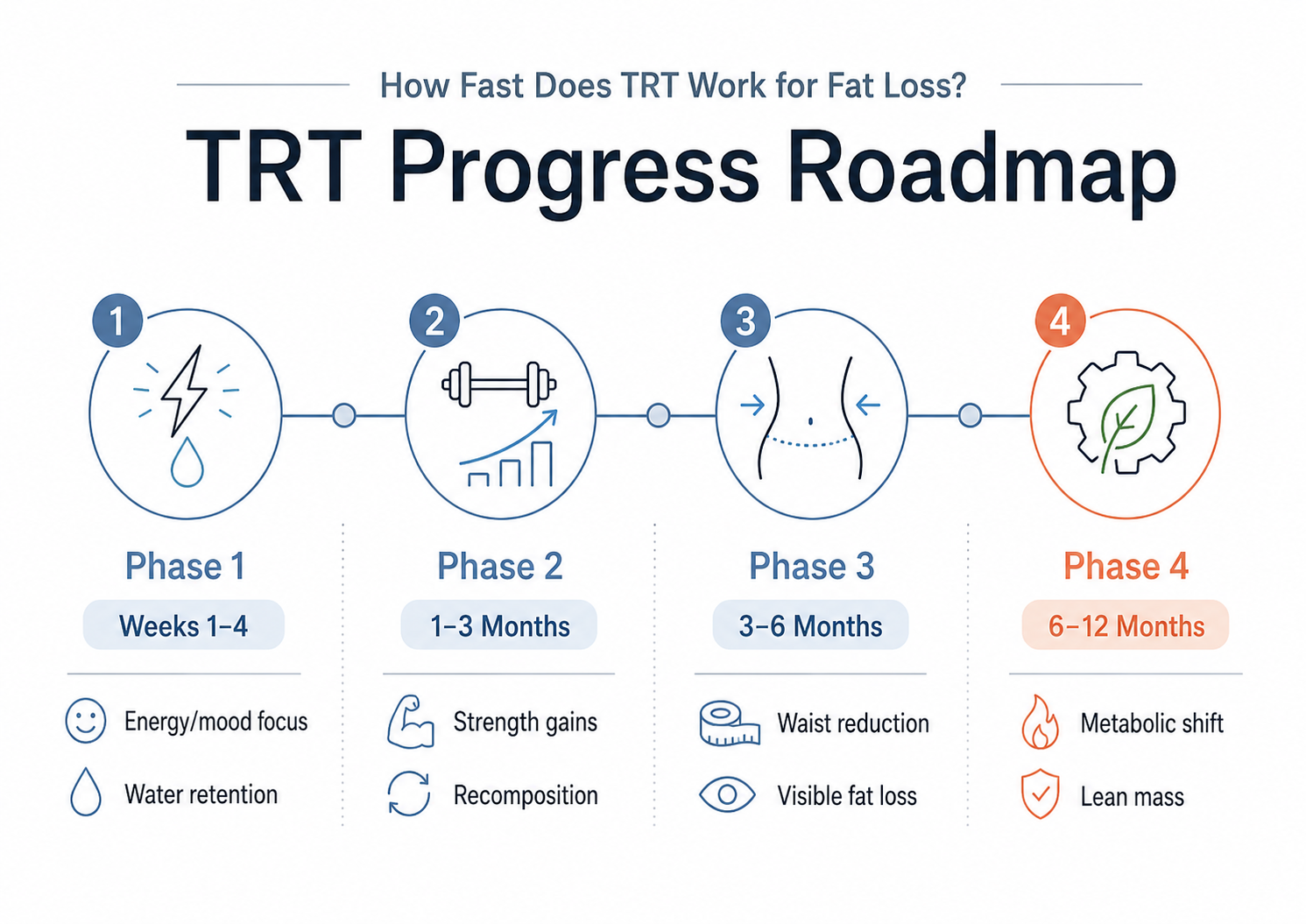
Trt does not show results instantly. It works gradually depending on baseline testosterone and muscle mass. Most of the cases show more changings in muscle vs fat. You may gain muscle fibers but don't reduce weight. You can even stay on weight management. Here we can have average time line to see results:
Weeks 1-4:
- You will likely feel improved energy and a better mood first.
- The scale might even go up a little. This is normal.
- Your muscles are holding more water and glycogen.
1-3 Months:
- Your strength will start to increase in the gym.
- Your clothes might feel a bit looser.
- But the number on the scale may not change much.
- You are gaining muscle and losing fat at the same time.
- Muscle weighs more than fat by volume.
3-6 Months:
- You may observe visible change.
- Your belly will look smaller.
- Your shoulders and chest will look more defined.
- One study found that body fat percentage dropped by 1.7% in the first three months of TRT. The second three months brought another 1.3% drop.
6-12 Months:
Your body will continue to change slowly over the first year. The fat loss and muscle gain keep going. Your metabolic health keeps improving. By the one-year mark, most people have a very different body composition. They are stronger, healthier and have lean body mass.
Realistic Expectations
The therapy is more about recomposition rather than instant fat loss. It is not like a dietary program that can provide a quick fix to body weight management. In fact, they work as muscle growth boosters then countable body mass reduction. Extended observations on a large scale are still needed.
What Are the Risks of TRT for Weight Loss?
Here are certain risks one need to consider:
- Hormonal dependency
- Cardiovascular concerns
- Sleep apnea risk
- Infertility and reduced sperm production
- Acne and skin issues
- Fluid retention
- Prostate-related concerns
Is TRT Safe for Weight Loss?
Trt for your weight loss journey is only safe after required blood tests, dosage control and considering specific medical conditions. Secondly the procedure is only exercised under defined professional scenarios.
Unsafe: the therapy may be unsafe for men with normal T-level and certain medical conditions.
TRT vs Natural Weight Loss Methods: Which Is Better?
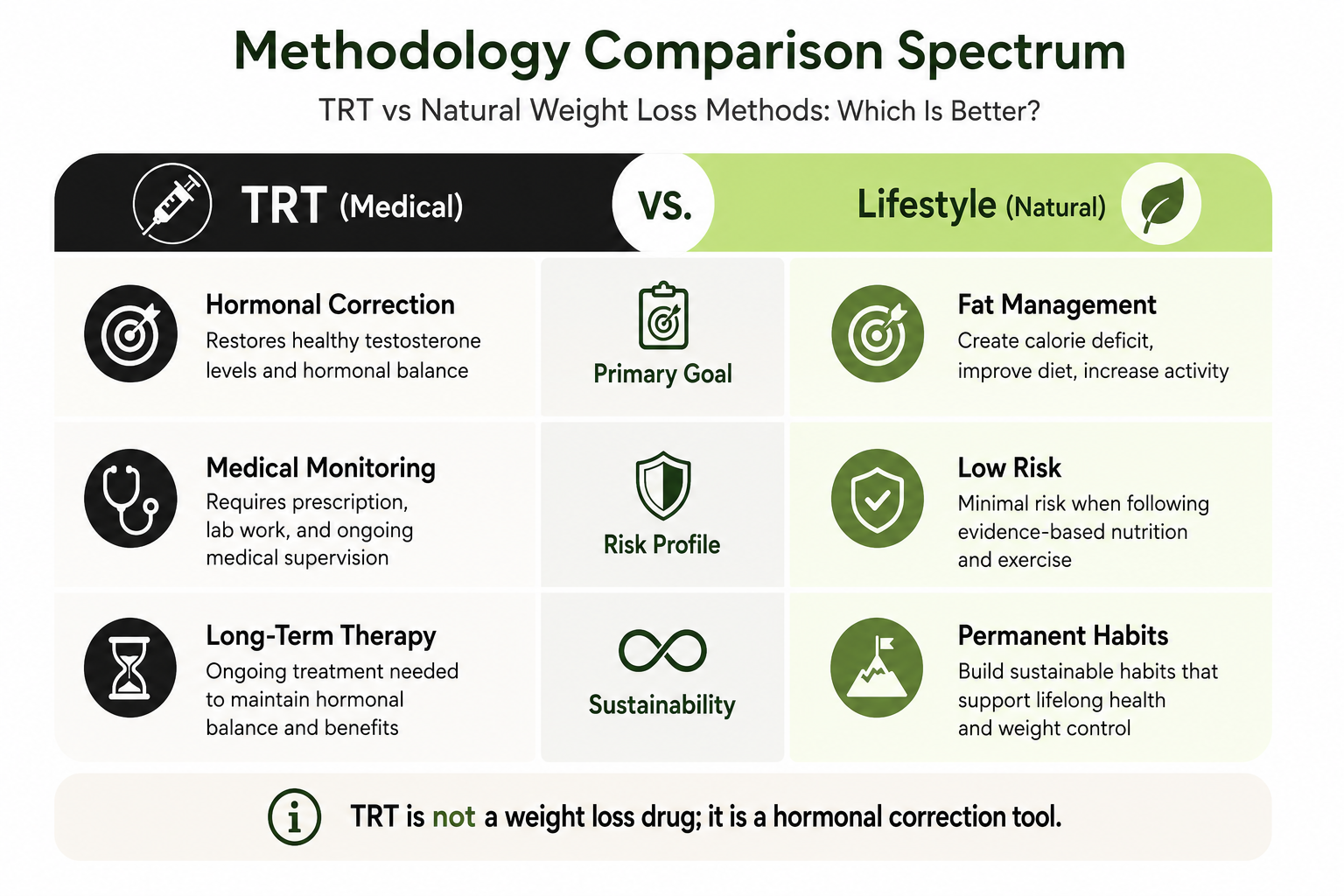
| Factor | TRT (Testosterone Therapy) | Natural Weight Loss Methods |
| Approach | Hormone-based (medical) | Lifestyle-based (diet & exercise) |
| Effect on Fat Loss | May support fat loss indirectly | Direct fat loss through calorie control |
| Speed of Results | Moderate, gradual | Can vary (often gradual but consistent) |
| Muscle Impact | Helps preserve/build muscle | Depends on training and protein intake |
| Best For | Clinically low testosterone cases | General population |
| Medical Supervision | Required | Not always required |
| Risk Level | Higher (hormonal risks) | Lower (if done properly) |
| Sustainability | Depends on long-term therapy | More sustainable long-term |
Conclusion
TRT is not a primary fat loss treatment. The therapy required medical supervision that can take up to one year for visible results. Moreover, it's only for men with t-dificiency. Results may vary depending on multiple factors. While long-term safety data is still evolving, so choose therapy after proper blood test and only of a professional prescribed.
If you suspect low testosterone, a medically supervised evaluation is the first step.
FAQs:
Do you burn calories on TRT?
Yes, you may burn comparatively more calories while taking the therapy because of a boost in metabolism. buT results may vary according to medical history and present condition.
How long does it take to lose weight while taking therapy?
It may take 24months to achieve visible results. Results may vary individually.
How much weight can I expect to lose by TRT?
One can expect 20-50+ lbs on average conditions depending on multiple health factors.
Does testosterone help you lose weight in menopause?
Yest T-therapy can help you to lose weight by increasing lean muscle mass and better muscle growth.
What are risks associated with testosterone injections?
Increased red blood cell count, swelling and pain, hair growth, increased body weight are some of the risks associated with therapeutic injections.
References:
- https://pmc.ncbi.nlm.nih.gov/articles/PMC11688172/#:~:text=Results%20indicated%20a%20substantial%20increase,0.007%29%20shifted%20throughout%20the%20study
- https://www.cdc.gov/obesity/adult-obesity-facts/index.html
- https://pmc.ncbi.nlm.nih.gov/articles/PMC4154787/#:~:text=The%20implication%20of%20testosterone%20therapy,a%20high%20rate%20of%20recidivism
- https://pmc.ncbi.nlm.nih.gov/articles/PMC4154787/#sec5
- https://health.clevelandclinic.org/visceral-fat-vs-subcutaneous-fat
- https://pmc.ncbi.nlm.nih.gov/articles/PMC4154787/#:~:text=Long%2Dterm%20testosterone%20therapy%20in,function%20and%20enhanced%20physical%20activity